Flickering Lights and Tripping Breakers: Common Commercial Electrical Repairs for Philadelphia Businesses
When your store lights flicker or a panel keeps tripping, it costs you time and sales. This guide explains the most common causes of these issues in Philadelphia shops, offices, and multi-use buildings, and how Mandia Electric approaches commercial electrical repairs that keep your doors open.
Why Philadelphia Businesses See Flickering Lights
In high-density areas like Center City, Old City, Fishtown, and University City, buildings share heavy loads and older infrastructure. That mix can create small voltage dips that show up as flickers, buzzing, or dimming. Shops with long fluorescent rows or older LED drivers notice this first because lighting reacts quickly to power swings.
Lighting Components That Fail First
Fluorescent fixtures use ballasts that wear out. Symptoms include a slow start, a steady buzz, or a strobe-like flicker even after you change lamps. Modern LED fixtures use drivers that can fail in a similar way. Heat, dust, and constant cycling shorten their life. If many fixtures act up at the same time, upstream power is the likely issue. If one or two aisles flicker, the problem is usually local to those fixtures or that branch circuit.
Commercial Electrical Repairs In Philadelphia: Core Issues We Diagnose
1) Overloaded or Poorly Balanced Circuits
In older retail bays and offices, new displays, espresso machines, space heaters, and back-of-house gear often land on the same few circuits. When that load spikes, breakers trip. In three-phase panels, uneven loading can push one phase near its limit while the others coast. That imbalance drives nuisance trips, premature breaker wear, and warm conductors.
Warning: A panel that feels hot, smells burnt, or shows browning on breakers is a safety risk. Power down affected equipment and call a licensed electrician.
2) Point‑of‑Sale Systems That Need Dedicated Power
POS stations, receipt printers, and network gear hate voltage dips. If they share a circuit with coolers, microwaves, or backroom tools, you get resets, frozen screens, and card reader timeouts. The fix is a dedicated circuit with clean grounding and stable voltage. In busy checkout lanes, we also check outlet tension, cord strain, and surge protection so equipment stays online during rush periods.
3) Breaker Panels Showing Stress
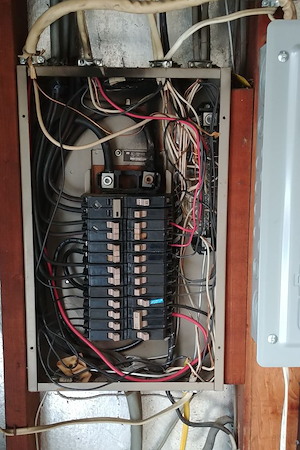
Commercial panels tell a story. Frequent trips on the same handle, warm covers, or loose labeling hint at mis-sized breakers or overloaded feeders. We also see shared neutrals and crowded gutters in mixed-use buildings. Those conditions make troubleshooting slow and create intermittent flicker, especially when neighboring tenants add equipment.
Important: Repeated breaker resets are not a fix. They mask heat and wear that can damage the bus or conductors over time.
4) Local Utility Swings You Can Feel
Dense neighborhoods on PECO’s metropolitan grid can experience short voltage dips when large motors start nearby or when load changes on the block. Indoor signs and accent lighting often blink first. While brief dips are normal on a busy network, steady flicker or frequent dips point to a service or distribution concern on your side of the meter. Logging events helps confirm the pattern before targeted repairs.
How We Pinpoint The Real Cause
The fastest repair starts with accurate data. Our commercial diagnostics focus on measured load, phase balance, and equipment-level behavior during your peak hours.
- Branch-circuit load checks during live operations so we see true peaks
- Phase-by-phase measurements to find unbalanced three‑phase legs
- Voltage and harmonic snapshots at panels and key devices
- Thermal imaging to spot hot terminations and stressed breakers
- Fixture-level testing to isolate failing ballasts or drivers
With this approach, we can separate a bad ballast in one aisle from a feeder problem that affects the whole floor. If work needs to happen after hours, we plan around your closing time to limit downtime. For recurring issues, we schedule a quick follow-up to confirm stability.
What Flicker Looks Like In Different Spaces
Retail Floors
Track heads near refrigerated cases flicker when compressors cycle. Long fluorescent runs can strobe if a single ballast in the chain fails. Dimming near entrances may come from door heaters, vestibule air curtains, or signage tapping the same branch. We map those loads to keep front-of-house lighting even and bright.
Open Offices
Shared plug strips under benches often hide space heaters or phone chargers that push over the limit. Conference room AV racks pull sudden spikes. If the panel is unbalanced, one leg sags and the LED troffers show it first. Correcting balance and isolating AV power fixes both flicker and resets.
Restaurants and Cafes
Espresso machines, grinders, and undercounter refrigeration start at once during morning rush. If POS shares that circuit, you get reboots right as the line forms. Dedicated circuits with clean grounding stop those drops and keep tickets flowing.
Three‑Phase Balancing: Why It Matters For Safety
In three‑phase panels, loads should be spread across all legs. When one phase carries much more than the others, conductors can run hot, neutral currents rise, and motors may struggle or overheat. Over time, that stress leads to nuisance trips and reduced equipment life. We measure phase currents under load, move circuits to even the legs, and check neutrals and terminations so the whole system runs cooler and safer.
For mixed-use buildings, we also look at shared risers and meter stacks. A few small changes at the panel can calm flicker across several suites, especially in older properties that were reworked over the years.
Dedicated Power For POS, Networks, And Back‑Office Gear
Your checkout lane should be boring in the best way. We provide dedicated circuits for POS, routers, and switches with tight connections and proper grounding so transactions clear the first time. Where noise-sensitive devices live next to compressors or motors, we separate circuits and improve bonding to cut down on interference. That keeps card readers, printers, and tablets stable during peak volume.
Lighting Repairs: Ballasts, Drivers, And Controls
When a section of lights flickers, the culprit is often a ballast or driver reaching end of life. We test with known-good lamps, confirm input voltage, and inspect for heat damage or swollen components. For larger spaces, we can group like-for-like swaps to even out color and brightness. If controls are part of the problem, we review dimmers, sensors, and time clocks for compatibility with the fixtures you use.
Local tip: Late-summer heat in Philadelphia raises building loads and can expose weak spots in panels and lighting. Scheduling a quick load check before your busy season helps prevent surprise flicker and nuisance trips.
What A Professional Repair Visit Includes
- Interview with your manager to log when and where issues happen
- Panel and feeder inspection with torque and thermal checks
- Live load readings and phase balancing recommendations
- Fixture and control testing to confirm root cause
- Clear repair plan that prioritizes safety and uptime
If we find heat damage, loose neutrals, or recurring trips on the same handle, we address those first. Do not ignore burnt smells or warm covers. Small electrical problems escalate quickly in busy retail and office settings.
Planning Repairs Around Philadelphia Buildings
Row-style storefronts and converted warehouses pose unique challenges. Conduit paths are tight, gear rooms are small, and multiple tenants share risers. We stage materials, coordinate with property managers, and time shutoffs to keep your team working. When space is limited, we propose compact panel upgrades with better capacity planning so future expansions are simpler.
How Mandia Electric Keeps Your Business Running
Our process is built for speed and clarity. We start with targeted diagnostics, share phase-balance and load data, then make practical fixes that stick. For recurring flicker tied to neighborhood load swings, we can add monitoring to prove stability after the repair. If your team needs help prioritizing, we group repairs to hit the biggest risks first so you see fewer resets and brighter aisles right away.
Explore our full electrical services or see how we handle bigger commercial electrical projects across Center City, Old City, and Fishtown. To book help fast, you can also schedule electrical repairs at a time that fits your business hours.
When To Call For Service
Call us if you notice any of the following in your space:
• Lights pulsing when nearby equipment starts
• The same breaker trips more than once in a week
• POS devices rebooting or freezing during checkout
• Warm panel covers, buzzing breakers, or a burnt smell
Safety first: If there is heat, odor, or visible arcing, power down affected circuits and contact a licensed electrician immediately.
Get Reliable Power Back On Your Side
Whether you run a boutique on Market Street or a studio on Frankford Avenue, steady power keeps customers comfortable and teams productive. If you need commercial electrical repairs Philadelphia from a trusted local partner, Mandia Electric is ready to help. For targeted troubleshooting or scheduled upgrades, our team will diagnose the cause, balance your system, and replace failing parts so flicker and trips do not come back.
To get started, call 215-752-2906 or book service for commercial electrical repairs today. We serve retail, office, and mixed-use spaces across Philadelphia with clear communication and minimal downtime.